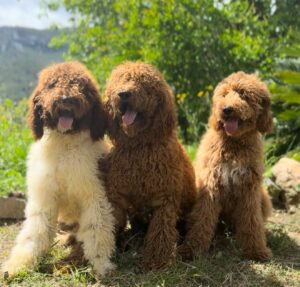
When a family decides to open the doors of their home to one of our puppies, there is often a lot of focus on preparing the most comfortable bed, buying the best food and securing the perimeter of the yard. And, while all of that is critical, there is something that sometimes goes unnoticed until the puppy arrives home: the incredible intelligence and sensitivity of the Australian Cobberdog.
Living with this breed is a fascinating experience. They are not just dogs that accompany you; they are beings that look you straight in the eye waiting to decipher what you feel and what you need. That emotional connection, which is the hallmark of the genuine Cobberdog, carries with it a precious responsibility: to nurture not only your body, but also your mind.
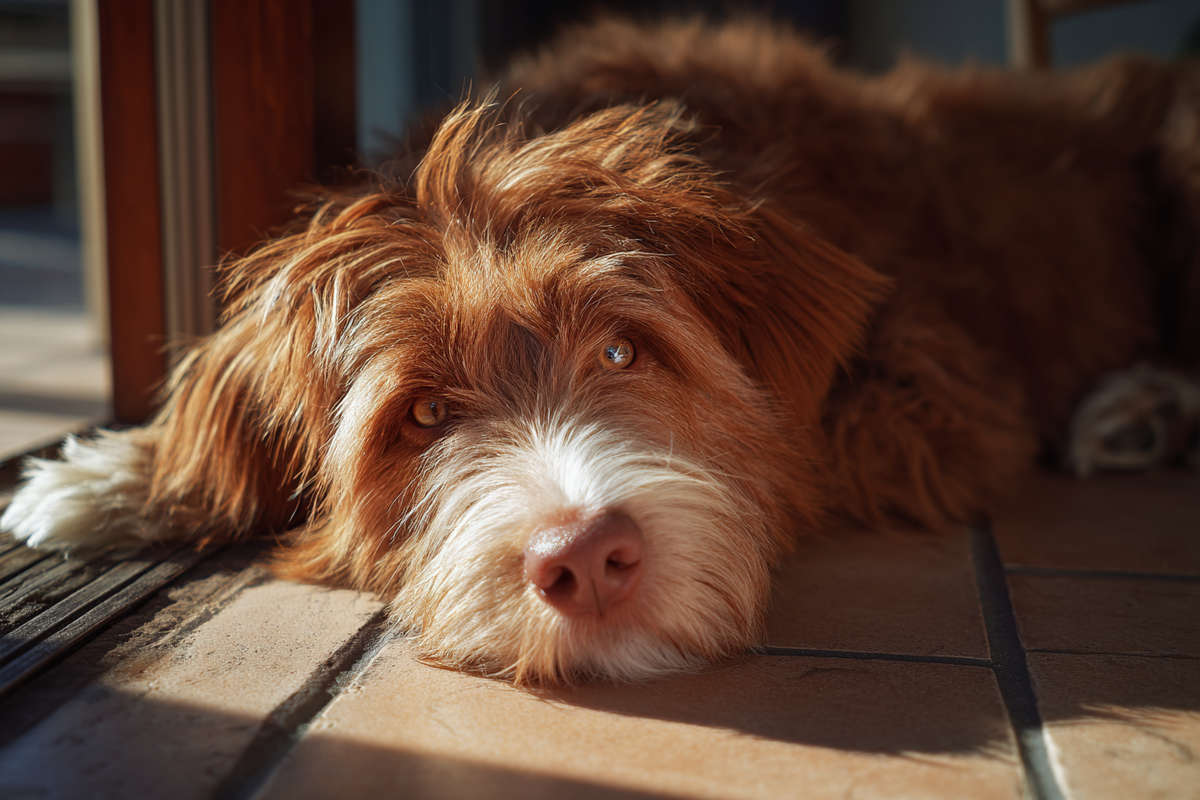
Many first-time owners are surprised to find that, after an hour of running around the park, their dog is still restless at home. The reason? Not mentally tired. In this article, I want to share with you, from our experience raising and living with them, how to achieve that perfect balance through gentle education and games that challenge their intellect. Forget about "military obedience"; here we are talking about building a common language.
Why the Australian Cobberdog is not an "ordinary" dog when it comes to learning.
To understand how to train your companion, you must first remember what is in his DNA. Coming from both therapy and assistance dog lines, the Australian Cobberdog has been selected generation after generation to have a low aggressiveness and high empathy. This is wonderful, but it also means that they are dogs with a very high emotional sensitivity.
A Cobberdog does not react well to yelling, physical punishment or traditional dominance-based training methods. If you try to impose your will by force or fear, the dog will most likely become blocked, frightened and lose trust in you. And regaining that trust costs much more than gaining it from the beginning.
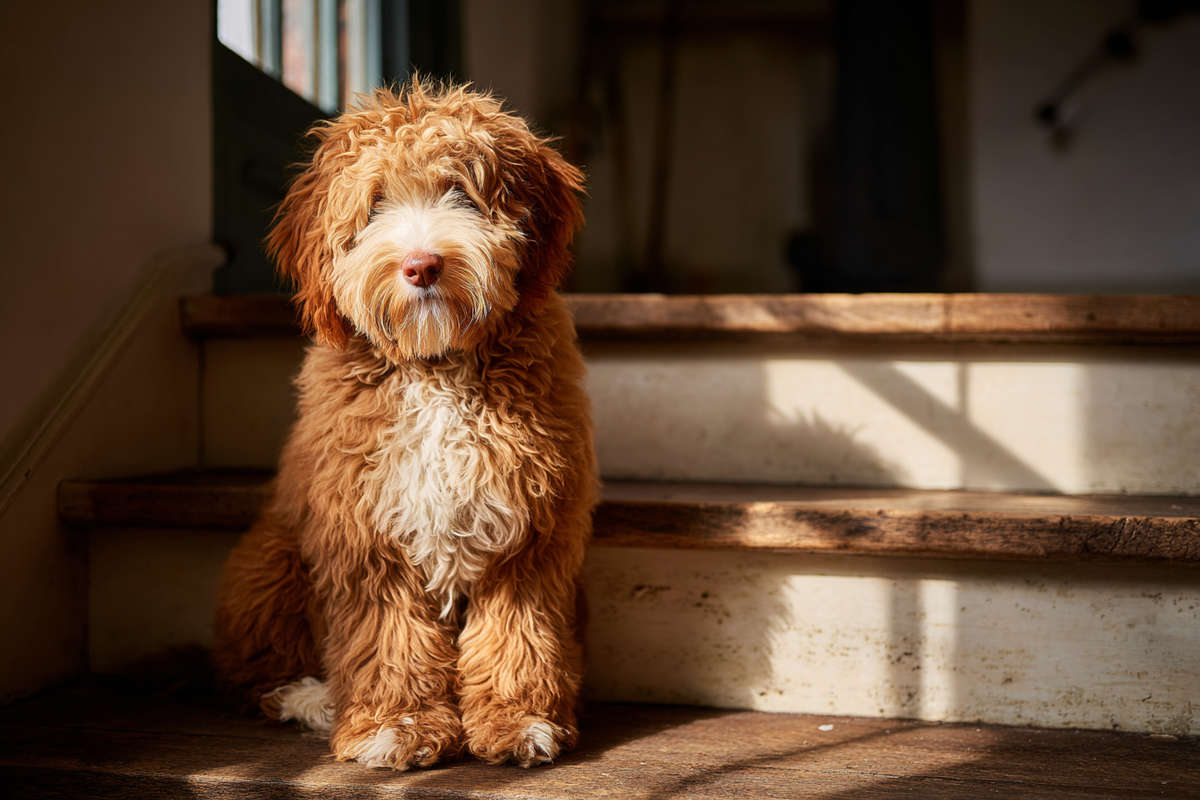
Their intelligence plays both sides of the coin: they learn the good things very quickly (such as sitting or pawing), but they also learn the "bad" things if we are not attentive (such as opening doors or stealing socks to make you pay attention to them). Therefore, education must be proactive and, above all, based on mutual respect.
The Fundamental Pillar: Positive Reinforcement
In our family and kennel, we are firm advocates of positive training. This does not mean letting the dog do whatever he wants; on the contrary, it means teaching him the rules of coexistence by rewarding correct decisions instead of punishing mistakes.
When your Cobberdog does something you like (for example, lying quietly while you watch TV), reward him. It can be a small piece of food, a gentle touch or a kind word. By reinforcing that behavior, you increase the likelihood that it will be repeated. Because of their eager-to-please nature (the famous will to please), your dog will actively seek to do those things that make you happy.
Tools for everyday use
- The voice: Your tone of voice is your best tool. Use high-pitched, happy tones to congratulate, and neutral, low tones (without shouting) to interrupt an unwanted action.
- The clicker or marker: A short word like "Very good!" or "Yes!" said at the exact moment he does the right action helps him understand what we want.
- High-value awards: At first, use highly palatable food. Eventually, the reward will simply be your affection or play, but in the beginning we need extra motivation.
Mental Stimulation: Tiring the brain to relax the body
Here is the big secret that many do not know: 15 minutes of mental work tires your dog more than 1 hour running after a ball.. Physical exercise is necessary for your health, of course, but mental exercise is what gives you emotional stability.
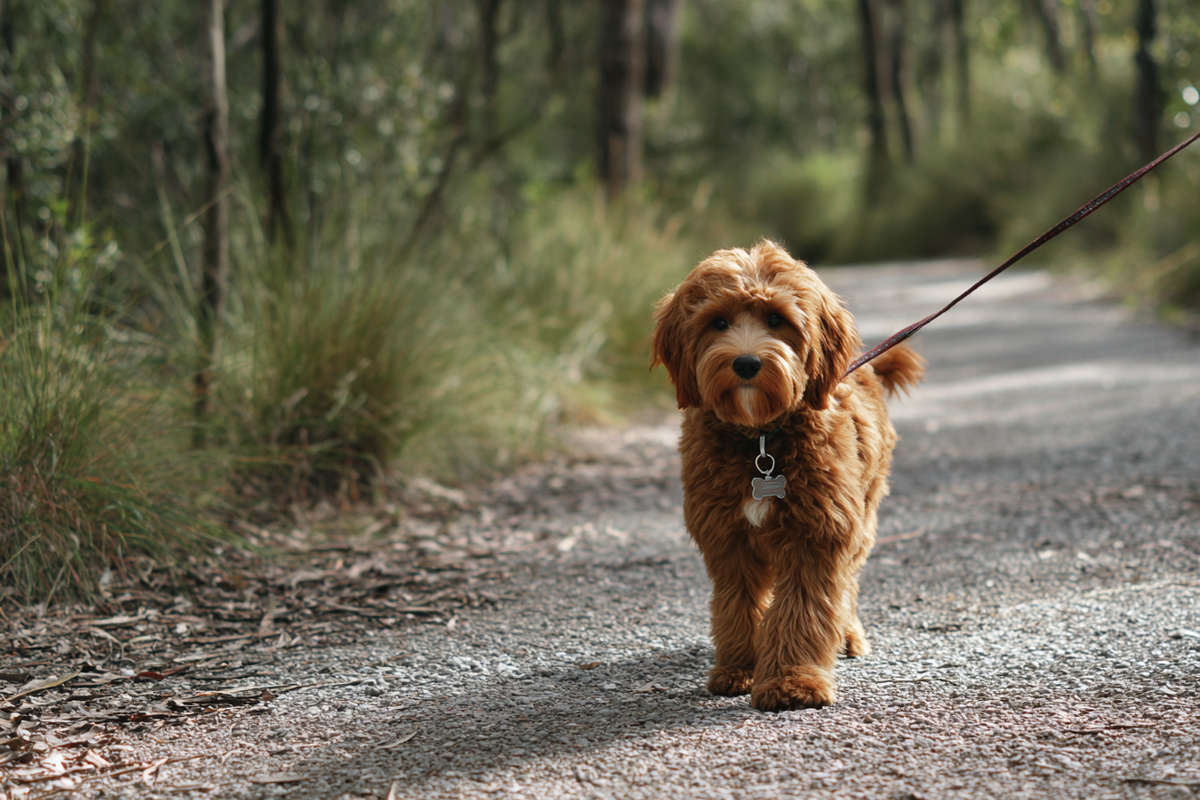
The Australian Cobberdog is a thinker. If you don't give him problems to solve, he'll make them up (and the solution may be redesigning your table legs). Here are some ideas to keep his mind busy and happy:
1. Scent Work Games (Scent Work)
Smell is the dog's most powerful sense. Tracking scents requires a lot of concentration and releases endorphins that relax them. You can start with something as simple as sownSpread a handful of their feed in the garden or on a snuffle mat and let them use their nose to find each grain. It's a great way to give them dinner.
2. Skills and Tricks
Teaching tricks is not just for the circus. Learning to "high-five," "roll," "play dead," or "pick up their toys" strengthens your bond. Each new trick is a challenge overcome together. Plus, these 5 or 10 minute training sessions are perfect for those rainy days when you can't get out as much.
3. Interactive toys and puzzles
There are many refillable toys on the market (Kong type) or puzzle boards where the dog has to lift lids or slide pieces to get the prize. These toys encourage autonomy and problem solving. A Cobberdog entertained solving a puzzle is a silent and happy dog.
The importance of teaching "Calmness
Sometimes, we become so obsessed with tiring them out that we create elite athletes who never want to stop. One of the most valuable lessons for an Australian Cobberdog is learn to do nothing. This is what we call the "off button".
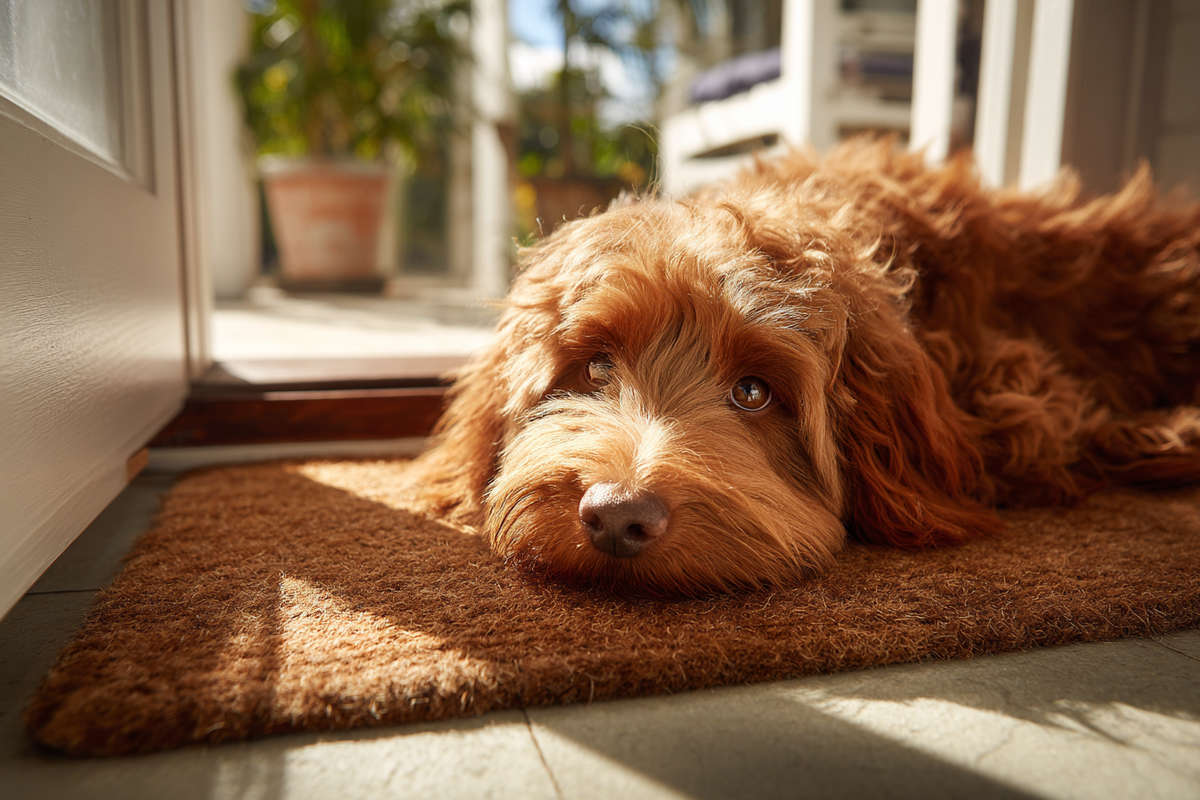
If you have read about the characteristics of the Australian LabradoodleYou will know that they are cheerful and lively dogs. However, at home we want calmness. Practicing calmness is simple but requires perseverance:
- Reward your dog when he spontaneously lies down to rest.
- Avoid very exciting games indoors; reserve ball throwing for the park.
- Practice relaxing massages or gentle brushing at quiet times to associate physical contact with calm, not just play.
Adolescence: Patience, lots of patience.
I can't write this guide without warning you about the adolescent stage, which usually appears between 6 and 12 months, depending on individual size and maturity. Suddenly, your adorable puppy who already knew how to sit and come to the call, seems to have become selectively deaf.
This is a normal phase. Your brain is restructuring and hormones are doing their thing. It is vital not to despair and back to basics. Don't get angry; just reduce the difficulty of the exercises, use more valuable rewards and be more patient. If you remain calm and consistent, this stage will pass and you will return to the balanced dog you were raising. Remember that a good foundation of early socialization helps a lot in navigating these adolescent potholes.
The therapy dog in you
Many of our Cobberdogs end up working as therapy or assistance dogs, or simply being the emotional support of their family. To encourage this, it is good to expose them in a controlled way to new situations throughout their lives, not just as puppies. Visiting new environments, seeing people with hats, wheelchairs or children running, always from a safe distance and rewarding calmness, will keep their minds flexible and confident.
In short, raising your Australian Cobberdog is a journey of mutual discovery. Don't look for the mechanical perfection of a robot, look for the connection of a companion who trusts you blindly. Spend time with his mind, be gentle with his emotions and you will have by your side the best dog you could ever imagine.
If you have questions about how to get started or what type of activities are best for your dog's specific age, remember that part of our way of breeding involves accompanying you throughout your furry friend's life. Enjoy the process of learning together!